Forces Express
A unified international cargo & courier portal built with Next.js and MongoDB — featuring live shipment tracking, a self-service shipping calculator, and carrier consolidation across DHL, FedEx, Bluedart, and Ekart.
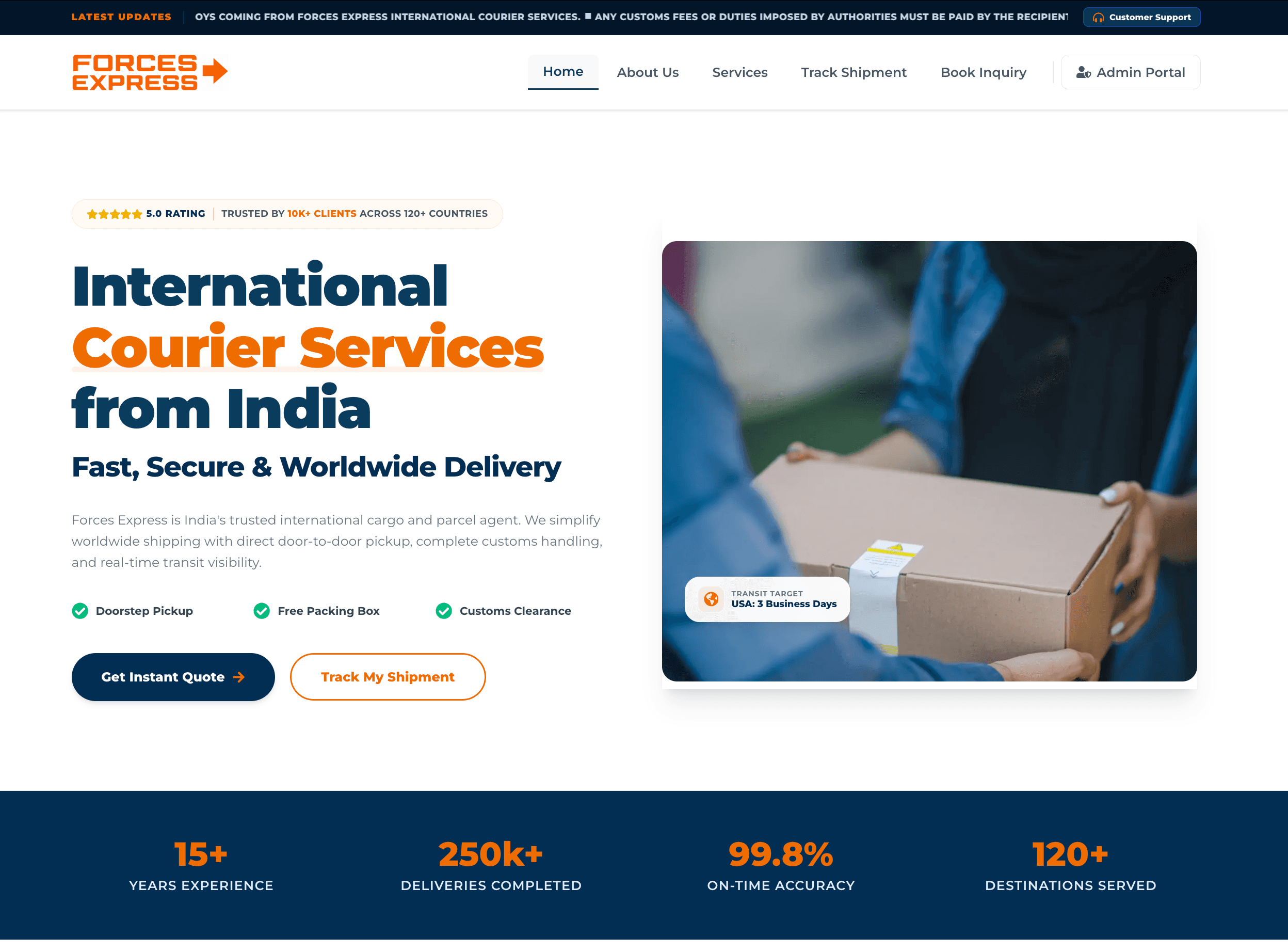
Consolidated carriers, fragmented customer experience
Forces Express Courier (OPC) Pvt Ltd partners with top global logistics giants — DHL, FedEx, Bluedart, Ekart, DTDC — to offer competitive international shipping rates. But their digital presence didn't match their operational scale.
Customers had to call support to get price estimates. Tracking a parcel required knowing which carrier handled the leg and visiting that carrier's website. The support desk spent 60%+ of their day answering two questions: "How much will it cost?" and "Where is my package?"
Forces Express needed a unified portal that would let customers calculate rates instantly, track shipments from any carrier in one place, and book pickups — freeing their team to focus on logistics operations rather than customer service inquiries.
Goals
- Build a self-service rate calculator handling volumetric and actual weight
- Create a unified tracking interface across multiple carrier networks
- Reduce support desk quote inquiries by at least 50%
- Provide an admin panel for updating tracking milestones in real time
- Design a trust-inspiring B2B + B2C logistics brand experience
Constraints
- 18-day turnaround for international courier season launch
- Complex rate cards varying by destination country and weight tier
- Must support tracking codes from 4+ different carrier formats
- Sub-1-second response time on tracking queries globally
Operational efficiency gains
Measured across the first 60 days of operations with the new portal.
How the portal works
Smart Shipping Calculator
Compares actual weight against volumetric weight (L x W x H / 5000) and applies destination-based rate tables automatically. Customers select country, input dimensions, and see exact rates for standard and express delivery in real time.
Unified Tracking Engine
A single search bar accepts any tracking code. MongoDB stores a normalized milestone timeline (status, location, details, timestamp) so updates from DHL, FedEx, and Bluedart render in an identical, easy-to-read format.
Secure Operations Dashboard
JWT-authenticated admin panel lets staff create shipments, assign carriers, add tracking milestones, and generate waybills. Changes reflect on the customer-facing tracking page instantly.
Carrier Trust Architecture
Brand logos and service comparison tables for DHL, FedEx, Bluedart, and Ekart establish credibility immediately. Clear SLA guarantees and customs handling guides reduce pre-booking anxiety.
Portal interfaces

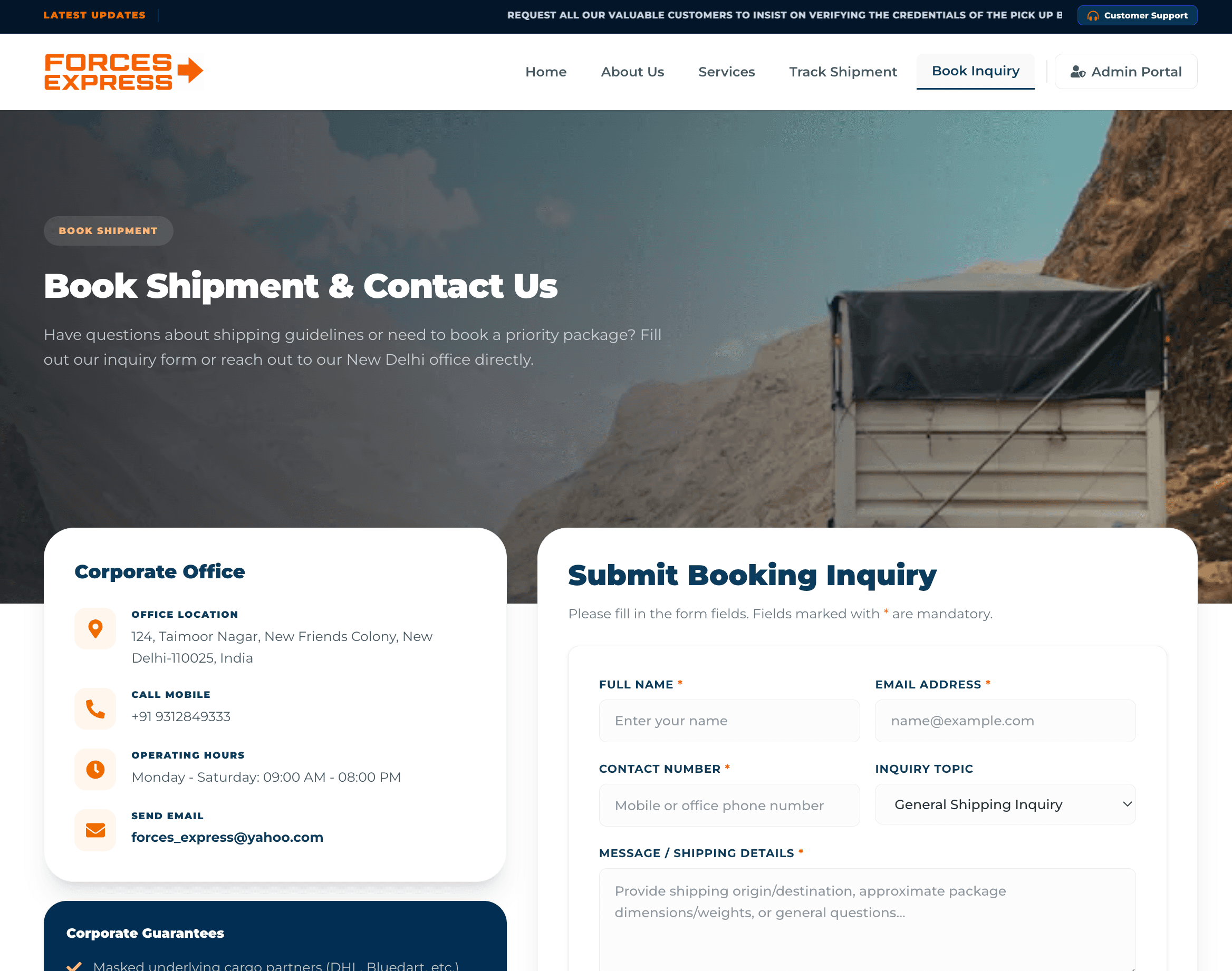
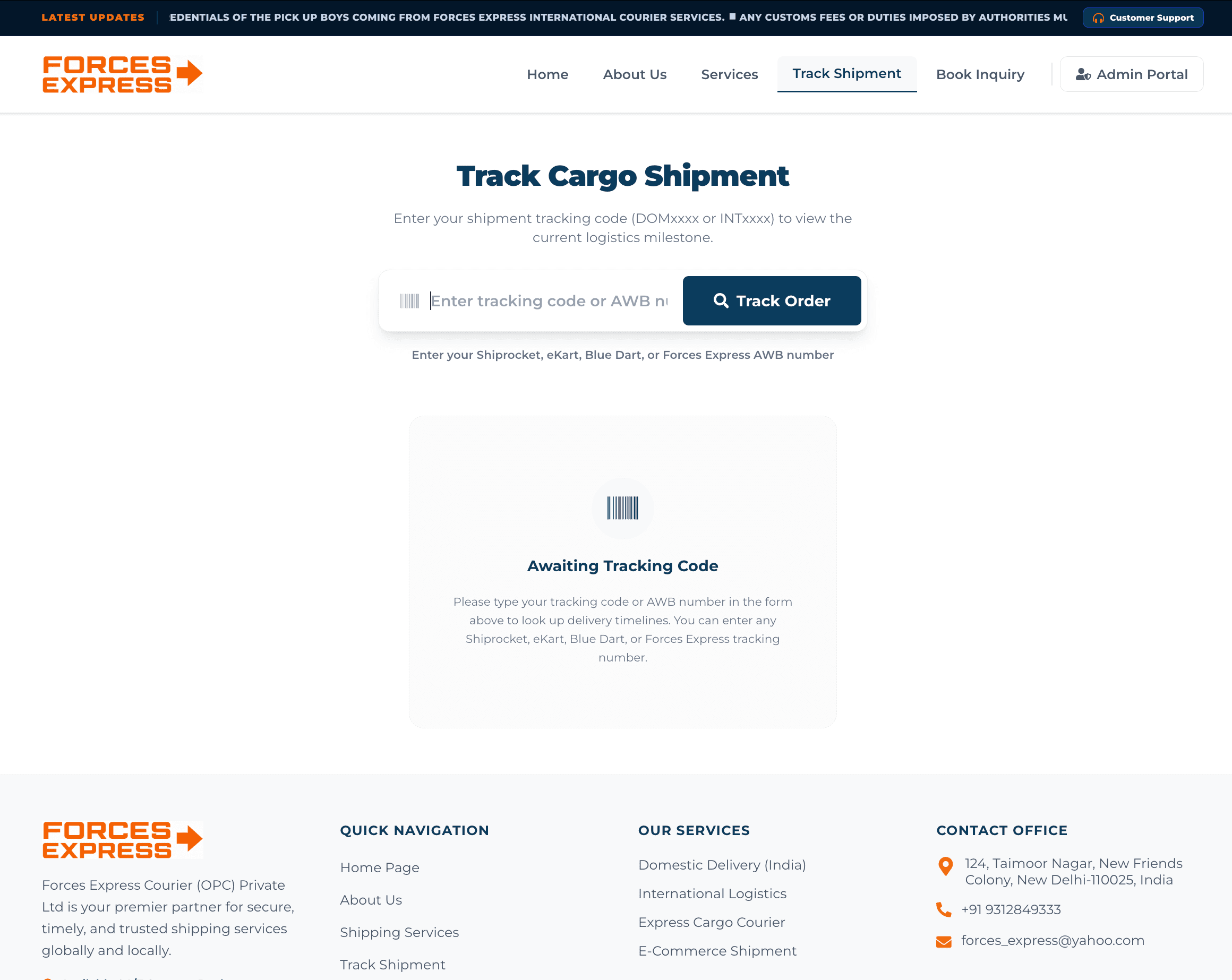
Why we chose each tool
Next.js 16
Server-side rendering for SEO on service pages, API routes for tracking lookups and calculator logic, and static generation for marketing pages — all in one framework.
MongoDB + Mongoose
Shipment documents need nested arrays for transit milestones (each with status, location, timestamp). Document databases handle this naturally without JOIN-heavy relational queries.
JWT + bcryptjs
The admin dashboard creates and updates live shipments. JWT sessions with bcrypt-hashed credentials protect these endpoints without requiring a third-party auth service.
Indexed Tracking Queries
MongoDB compound indexes on trackingCode fields reduce lookup response times to sub-0.8s, even as the shipment collection grows.
Vercel Edge Network
Global CDN ensures tracking pages load fast for recipients worldwide — not just in India where the shipments originate.
18-day sprint breakdown
Rate Matrix & Flow
Days 1–4
Mapped rate cards for 50+ countries, defined volumetric calculation logic, and designed the tracking state machine.
Database & APIs
Days 5–9
Built MongoDB schemas with indexed tracking codes, created Next.js API routes for calculation and tracking lookups.
Frontend & Admin
Days 10–14
Developed customer-facing calculator, tracking timeline UI, and JWT-authenticated admin dashboard for milestone updates.
Testing & Deploy
Days 15–18
Tested rate calculations against 200+ test cases, verified tracking lookups under load, and deployed to Vercel Edge.
"The shipping calculator alone saved our team countless hours every week. Customers get their rates immediately, and the tracking system gives them confidence. GenForge delivered exactly what our business needed in under three weeks.
Questions about this project
Why build a custom logistics portal instead of using off-the-shelf shipping software?+
How does the shipping calculator handle volumetric vs actual weight?+
How does unified tracking work across different carriers?+
What security measures protect the admin dashboard?+
Can you build a similar portal for our logistics company?+
Similar projects
Online Planet
Multi-vendor marketplace with vendor portals and order management.
Nescon Lifts
B2B catalog with progressive quote calculator and lead routing.
Nature Medica
E-commerce store with multi-courier shipping and automated labels.
Need a custom logistics portal or calculator?
We build full-stack web applications with custom calculation engines, tracking systems, and admin dashboards.